11/20/2011


10/10/2011
Agile ALM, at JavaOne 2011
My taped session "Agile ALM" from JavaOne 2011. This session illustrated recipes for Java developers who want to integrate flexible agile practices and lightweight tools along software development phases. Besides strategies, this session explores state-of-the-art tool chains. The first part of the session discusses Agile ALM, its context, building blocks and history. In the second part, I've zoomed in to one major facet of an Agile ALM: releasing software. I've talked about different common and spread ways how to release Maven based projects, both concepts as well as tools such as Jenkins/Hudson, Artifactory and Sonar.
9/03/2011

8/28/2010

Agile ALM: release in November
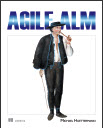 | Dear enthusiasts, who are interested in my book Agile ALM, and are waiting for it (as I'm waiting for it myself). I've submitted the completed manuscript to Manning end of March. Due to several delays (sorry, I cannot influence that), the book will be available in November, finally, according to the recent schedule of the publisher. I hope to see it printed early enough for Devoxx conference, the second biggest Java conference. |
7/02/2010
Agile ALM: -update-
Some news about Agile ALM.
Manning is reading through the manuscript now (again). Chapters are streamed to production now (that includes the steps: copy edit, technical proofreading, typeset of chapters). As you know, chapters 1 to 4 are in MEAP already, the preface and chapter one are available for free.
The timeline:
Forecast (according to the publisher)
10/01 available in stores
07/07 Chapter 5 will be put to MEAP (every 7 to 10 days, a new chapter will be added to MEAP)
Past
06/27 I've incorporated all reviews of Manning's last review batch (3/3) consisting of 8 individual reviews
06/23 last publisher review received
06/14 review phase finished, officially
05/31 Last chapter edited/polished by Manning
05/23 Milestone: Manning's editing was scheduled to be completed today
04/23 Manning put a polisher/editor on the project, timeline for him:
editing 2 chapters a week
04/08 I submitted the revised manuscript, after incorporating feedback
from Manning's reviewers
03/28 I submitted the completed manuscript
Manning is reading through the manuscript now (again). Chapters are streamed to production now (that includes the steps: copy edit, technical proofreading, typeset of chapters). As you know, chapters 1 to 4 are in MEAP already, the preface and chapter one are available for free.
The timeline:
Forecast (according to the publisher)
10/01 available in stores
07/07 Chapter 5 will be put to MEAP (every 7 to 10 days, a new chapter will be added to MEAP)
Past
06/27 I've incorporated all reviews of Manning's last review batch (3/3) consisting of 8 individual reviews
06/23 last publisher review received
06/14 review phase finished, officially
05/31 Last chapter edited/polished by Manning
05/23 Milestone: Manning's editing was scheduled to be completed today
04/23 Manning put a polisher/editor on the project, timeline for him:
editing 2 chapters a week
04/08 I submitted the revised manuscript, after incorporating feedback
from Manning's reviewers
03/28 I submitted the completed manuscript
6/09/2010
Agile ALM -update-
"Agile ALM" is in Early Access now, finally: http://manning.com/huettermann
At the moment, chapters 1 to 4 or available in early access, the first one for free.
The timeline:
Forecast (according to the publisher)
10/01 available in stores
07/01 review comments incorporated (at the latest), GO for production
06/14 review phase finished
Past
05/31 Last chapter edited/polished by Manning
05/23 Milestone: Manning's editing was scheduled to be completed today
04/23 Manning put a polisher/editor on the project, timeline for him:
editing 2 chapters a week
04/08 I submitted the revised manuscript, after incorporating feedback
from Manning's reviewers
03/28 I submitted the completed manuscript
At the moment, chapters 1 to 4 or available in early access, the first one for free.
The timeline:
Forecast (according to the publisher)
10/01 available in stores
07/01 review comments incorporated (at the latest), GO for production
06/14 review phase finished
Past
05/31 Last chapter edited/polished by Manning
05/23 Milestone: Manning's editing was scheduled to be completed today
04/23 Manning put a polisher/editor on the project, timeline for him:
editing 2 chapters a week
04/08 I submitted the revised manuscript, after incorporating feedback
from Manning's reviewers
03/28 I submitted the completed manuscript
5/31/2010
Agile ALM: -update-
Now, my completed manuscript is edited by Manning's polisher, completely. (edited based on the already edited version, that I've provided) At the moment, Manning is running another review on all chapters. I have no details about when this external review will be finished. And there is still no concrete timeline available about entering Manning Early Access Program (MEAP), or production. I have the publisher's GO meanwhile, though, that the book can enter MEAP mode, and that they do that these days. I hear that since end of 2009, thus I want to see that in my browser. :-) The book will be promoted to production very soon (according to publisher).
05/31 Last chapter edited/polished by Manning
05/23 Milestone: Manning's editing was scheduled to be completed today
04/23 Manning put a polisher/editor on the project, timeline for him:
editing 2 chapters a week
04/08 I submitted the revised manuscript, after incorporating feedback
from Manning's reviewers
03/28 I submitted the completed manuscript
05/31 Last chapter edited/polished by Manning
05/23 Milestone: Manning's editing was scheduled to be completed today
04/23 Manning put a polisher/editor on the project, timeline for him:
editing 2 chapters a week
04/08 I submitted the revised manuscript, after incorporating feedback
from Manning's reviewers
03/28 I submitted the completed manuscript
5/25/2010
Agile ALM -update-
Manning has polished/edited the preface and the first six chapters of my manuscript. At the moment, I'm waiting for the editing result of the last two chapters of my book, chapters seven and eight. Manning committed to complete their polishing process by May, 23th, on the completed manuscript, which was also edited by a commercial editing service before, on my behalf and at my cost. Still no update on entering MEAP mode, and no concrete update on the timeline for going to production.
05/23 Milestone: Manning's editing/polishing was scheduled to be completed today
04/23 Manning put a polisher/editor on the project, timeline for him: editing 2 chapters a week
04/08 I submitted the revised manuscript, after incorporating feedback from Manning's reviewers
03/28 I submitted the completed manuscript
05/23 Milestone: Manning's editing/polishing was scheduled to be completed today
04/23 Manning put a polisher/editor on the project, timeline for him: editing 2 chapters a week
04/08 I submitted the revised manuscript, after incorporating feedback from Manning's reviewers
03/28 I submitted the completed manuscript
5/16/2010
Agile ALM -update-
- My completed manusript is idling in Manning's content management system since end of March, and waits to be read by everyone who is interested in Agile Application Lifecycle Management -- a more detailed definition of the target audience is provided in the preface (hmm, maybe I could already publish the preface on my web site? that would help to give you an even deeper impression. Will think about that..)
- May, 14th, Manning renamed the guy they put on the project to be an "editor" (formely they called him "polisher"). The guy is not an employee of Manning, he is a guy busy in the Configuration Management domain . I'm not sure, why Manning has choosen him to do the editing job. Configuration Management is an aspect of my book for sure, but, perhaps it has a part of 1%, depending on the definition.
- As you already know, the editor (formely known as "polisher"), sent me the preface and the first chapter back, in an edited revision. Beside punctuation, some synonyms here and there, we had verbose daily communications about many things, e.g. citations. I've returned the resulting versions of the preface and the first chapter on the same business day. Maybe I will give more details on those daily debates later. Interestingly, many phrasings now look the same as they looked like before I've incorporated the feedback from Manning's reviewers and other guys and services
- Manning committed to finish the polishing process by May, 23th, on the completed manuscript. Looks like, this will not happen: they "polished" about 35 pages from 300+ in total, until now.
- Last Friday (May, 14th), the polisher/editor committed on delivering edited revisions of chapter 2, chapter 3 and chapter 4, by Monday (this is tomorrow, May, 17th). I've not received anything yet (now it is Sunday).
- Polishing two chapters a week (Manning's original committment) was very feasible in my opinion, especially, because of the fact that the manuscript was reviewed and edited by 10+ people and also by a commercial service (that I've hired), beside the reviewers who were recruited by Manning. But obviously, the "polisher/editor" overcommited on this editing task, maybe due to other work, unfortunately
- Still no update on entering MEAP mode
- And, finally, I will include a statement of Ted Neward, that he gives me in the context of "continuous integration", more on that later (also more details on all these great contributions, reviews and all that, will follow)
- May, 14th, Manning renamed the guy they put on the project to be an "editor" (formely they called him "polisher"). The guy is not an employee of Manning, he is a guy busy in the Configuration Management domain . I'm not sure, why Manning has choosen him to do the editing job. Configuration Management is an aspect of my book for sure, but, perhaps it has a part of 1%, depending on the definition.
- As you already know, the editor (formely known as "polisher"), sent me the preface and the first chapter back, in an edited revision. Beside punctuation, some synonyms here and there, we had verbose daily communications about many things, e.g. citations. I've returned the resulting versions of the preface and the first chapter on the same business day. Maybe I will give more details on those daily debates later. Interestingly, many phrasings now look the same as they looked like before I've incorporated the feedback from Manning's reviewers and other guys and services
- Manning committed to finish the polishing process by May, 23th, on the completed manuscript. Looks like, this will not happen: they "polished" about 35 pages from 300+ in total, until now.
- Last Friday (May, 14th), the polisher/editor committed on delivering edited revisions of chapter 2, chapter 3 and chapter 4, by Monday (this is tomorrow, May, 17th). I've not received anything yet (now it is Sunday).
- Polishing two chapters a week (Manning's original committment) was very feasible in my opinion, especially, because of the fact that the manuscript was reviewed and edited by 10+ people and also by a commercial service (that I've hired), beside the reviewers who were recruited by Manning. But obviously, the "polisher/editor" overcommited on this editing task, maybe due to other work, unfortunately
- Still no update on entering MEAP mode
- And, finally, I will include a statement of Ted Neward, that he gives me in the context of "continuous integration", more on that later (also more details on all these great contributions, reviews and all that, will follow)
5/06/2010
Agile ALM -update- / polishing by end of May
Manning set the timeline that they polish my completed manuscript by end of May. Looks like, the book is on its final spurt, finally.
5/04/2010
Agile ALM and Fragile Agile -update-
As already written, I've completed my manuscript of Agile ALM end of March. Beside my writing and editing, I've also organized a lot of other people who edited, reviewed and contributed content. Now we are in a phase, where we "bring the book to production" (according to the publisher). In the past, I've already incorporated feedback from Manning's reviewers. Because Manning did not give me a list of any unclear phrasings or similar, I've hired a professional editing service for supporting me, additionally. This service gave me many very good hints. Beginning of last week, Manning put someone on the project to further "polish" the completed manuscript. Unfortunately, I still did not get an official timeline from the publisher yet, when this polishing is supposed to be completed, and when the book will be in production, finally. "The polisher" just goes through each chapter at the moment. Because you know Manning you probably also know that they run an early access program named MEAP. My book is still not available there yet, and I have no idea, when it will be available through MEAP, finally. You may remember that I've announced the book for MEAP already September 2009. I have no influence on that, actually. I'm very sorry about that.
With my German book Fragile Agile, progress is much more visible and transparent. We finished the "bulk text writing", and do editing now. Then, Hanser's editor will give us concrete feedback what sections we should further optimize. But this is something that is scheduled for the near future, and did not start yet. Meanwhile, my book (that I co-author) is listed on the publisher's web site: Fragile Agile@Hanser. The book is scheduled to be available September, 2nd. It will cost EURO 24,90. I think, it should be possible already to buy the book via Hanser. The public web site also contains the official book description. It was created by our lovely editor. She is working in an extremely professional way. It is really a pleasure to write with Hanser. I've attached the book description here: (sorry, German book, German summary)
Stay in touch ..
With my German book Fragile Agile, progress is much more visible and transparent. We finished the "bulk text writing", and do editing now. Then, Hanser's editor will give us concrete feedback what sections we should further optimize. But this is something that is scheduled for the near future, and did not start yet. Meanwhile, my book (that I co-author) is listed on the publisher's web site: Fragile Agile@Hanser. The book is scheduled to be available September, 2nd. It will cost EURO 24,90. I think, it should be possible already to buy the book via Hanser. The public web site also contains the official book description. It was created by our lovely editor. She is working in an extremely professional way. It is really a pleasure to write with Hanser. I've attached the book description here: (sorry, German book, German summary)
Gehören Sie auch zu denen, die sich schon in einem agilen Projekt quälen mussten und enttäuscht waren, dass die Agilität nicht funktioniert hat? Und das, obwohl man doch immer wieder hört, mit agilen Methoden oder Vorgehensweisen sei der Erfolg quasi garantiert.
Woran liegt es, dass viele agile Projekte nicht erfolgreich sind? Der Agilen Softwareentwicklung liegen vier Wertepaare und zwölf Prinzipien zugrunde, die verinnerlichen sollte, wer Projekterfolg haben will. Aber wie setzt man zum Beispiel dieses Prinzip um: "Einfachheit - die Kunst der Maximierung der Arbeit, die nicht getan wird - ist wesentlich."
In diesem Buch zeigen Pavlo Baron und Michael Hüttermann mit Witz und Esprit, welche Fallstricke die Agilen Werte und Prinzipien bereithalten und wie sie in vielen Projekten falsch interpretiert werden. Natürlich zeigen sie auch, wie man es besser machen kann, wie man Agilität richtig versteht und im Projekt lebt. Sie greifen dabei auf ihre Erfahrungen aus zahlreichen Projekten zurück und erzählen eine Reihe von lehrreichen Anekdoten, die Sie zum Schmunzeln bringen werden.
Stay in touch ..
4/24/2010
Agile ALM: Additional information, discussions, source code, ..
I have created a project on Kenai to host accompanying sources for my book Agile ALM.
I added configuration and test scripts to demonstrate discussed concepts, where appropriate. Some of the scripts are contributed by the leading experts of the covered topics, others were created in close collaboration. In my book, one of the major tool backbones is Maven. As a result, most of the provided scripts are Maven scripts. Much more details will follow.
Additionally, on the Kenai site, you can use the forum to give feedback, suggestions, drop questions, and so on. Since Manning still does not list my book on their public site, this Kenai project is the public anchor where you have the chance to profit from discussions and code snippets.
I added configuration and test scripts to demonstrate discussed concepts, where appropriate. Some of the scripts are contributed by the leading experts of the covered topics, others were created in close collaboration. In my book, one of the major tool backbones is Maven. As a result, most of the provided scripts are Maven scripts. Much more details will follow.
Additionally, on the Kenai site, you can use the forum to give feedback, suggestions, drop questions, and so on. Since Manning still does not list my book on their public site, this Kenai project is the public anchor where you have the chance to profit from discussions and code snippets.
4/23/2010
Agile ALM, cover
The cover of my Manning book "Agile ALM" is available as a draft:
It is always better to have a face! :)
It is always better to have a face! :)
4/21/2010
Agile ALM – Application Lifecycle Management, with Java and Lightweight Tools
My new English book left its long running development stealth mode and is now visible publicity. It is about Agile ALM, and will be published by Manning. What is Agile Application Lifecycle Management? ALM is the intelligent composition of build-, configuration-, change-, test-, quality-, requirements-, integration- and release management. It is a comprehensive approach spanning development phases and project roles, taking care of all artifact types.
Agile ALM
- Is the marriage of business management to software engineering
- Targets processes and tools working together seamlessly, without silos (silos are for farmers!)
- Spans software development life-cycle phases, project roles and artifact types
- Enriches ALM with Agile strategies
- Is based on Software Configuration Management and version control
- Is based on a set of lightweight tools, enabling a team to collaborate efficiently
This book has three main purposes. What is Agile ALM and how can Application Lifecycle Management be rolled out using Agile strategies and best of breed tools? Secondly, what isolated tesserae (toolboxes) can be created for these de facto standard tools for use in advanced, real world use cases? Thirdly, how can we choose the right tools, use them right, and integrate them while applying Agile strategies? These questions are the focus of this book. The book delivers all information you need to implement ALM in an Agile environment, in a single location. This book will enable you to understand and put into practice entire tool chains for automating the builds, tests, and continuous integration of your applications. This book helps you deliver quality applications without wasting time on repetitive tasks, or spending time hunting for a toolbox of strategies and tools.
My book is split into the following chapters:
Part 1 Introducing Agile and ALM
1 Moving to Agile ALM
2 ALM and Agile strategies
Part 2 Functional ALM
3 Implementing Scrum
4 Task-Based Development
Part 3 Integration Management and Releasing
5 Dependency management and releasing
6 Productive development environment
7 Advanced Continuous Integration: Tooling and Recipes
Part 4 Outside-in development and barrier-free development/testing
8 Collaborative development and barrier-free development/testing
I have already completed and submitted the final manuscript end of March. At the moment, Manning is inspecting the manuscript and collects issues they want me to adjust, finally.
Please let me say thank you here: I very appreciate the contributing, reviewing and editing work of about 20 leading experts on the market. Thank you, that you helped me. Much more about that later, too.
There is much more to say of course about this book, and I will do that from now on. I will start now throwing updates about the book (content) itself and the further publishing process, on my communication channels including my blog and Twitter, in short intervals. Please stay in touch!
Agile ALM
- Is the marriage of business management to software engineering
- Targets processes and tools working together seamlessly, without silos (silos are for farmers!)
- Spans software development life-cycle phases, project roles and artifact types
- Enriches ALM with Agile strategies
- Is based on Software Configuration Management and version control
- Is based on a set of lightweight tools, enabling a team to collaborate efficiently
This book has three main purposes. What is Agile ALM and how can Application Lifecycle Management be rolled out using Agile strategies and best of breed tools? Secondly, what isolated tesserae (toolboxes) can be created for these de facto standard tools for use in advanced, real world use cases? Thirdly, how can we choose the right tools, use them right, and integrate them while applying Agile strategies? These questions are the focus of this book. The book delivers all information you need to implement ALM in an Agile environment, in a single location. This book will enable you to understand and put into practice entire tool chains for automating the builds, tests, and continuous integration of your applications. This book helps you deliver quality applications without wasting time on repetitive tasks, or spending time hunting for a toolbox of strategies and tools.
My book is split into the following chapters:
Part 1 Introducing Agile and ALM
1 Moving to Agile ALM
2 ALM and Agile strategies
Part 2 Functional ALM
3 Implementing Scrum
4 Task-Based Development
Part 3 Integration Management and Releasing
5 Dependency management and releasing
6 Productive development environment
7 Advanced Continuous Integration: Tooling and Recipes
Part 4 Outside-in development and barrier-free development/testing
8 Collaborative development and barrier-free development/testing
I have already completed and submitted the final manuscript end of March. At the moment, Manning is inspecting the manuscript and collects issues they want me to adjust, finally.
Please let me say thank you here: I very appreciate the contributing, reviewing and editing work of about 20 leading experts on the market. Thank you, that you helped me. Much more about that later, too.
There is much more to say of course about this book, and I will do that from now on. I will start now throwing updates about the book (content) itself and the further publishing process, on my communication channels including my blog and Twitter, in short intervals. Please stay in touch!
4/16/2010
Fragile Agile
| My German book "Fragile Agile" has a face now, i.e. a cover. The book is published by Hanser. This has the effect that we may win the nobel prize with this book 2011, as Hanser did this year with another book. In contrast to this other book, our book here is more for a mass market. This book is co-authored by Pavlo Baron. We write it in a very close collaboration, you may say, in an Agile way. As you may expect when you read the title, the book is a unique, very interesting discussion of Agile and ... but stop, let's wait until May for more details on this book. With May, Hanser will list the book officially. This also means you can order it in advance then, e.g. via Amazon, this lovely online book store. This is all for now, cheers! |  |
4/08/2010
JAX and Entwicklertag
Some next talks: May, 3rd, I will be at JAX giving the talk "Das agile Alibi", together with Pavlo Baron, 3.30 pm - 4.15 pm. June, 23th, 2.30 pm - 3.15 pm, I will present the same talk at Entwicklertag Karlsruhe, again with Pavlo Baron. If you are around, let me know.
3/31/2010
what a wonderful error message, aka: two favorites
There are many things I extremely like. Let's illustrate two of my favorites with a descriptive example. Firstly, I like "meaningful" error messages. You know what I mean, nonsense messages adding no value, just being meaningless, no help for the poor user to solve the issue. Rather killing his last razor-thin rest of motivation to get it running.
And a second favorite what I really like is the Eclipse plugin hell. Disclaimer: I really like working with Eclipse! I'm in the JetBrains Academy, but this does not say anything about that. All tools are good, all tools have their pros and cons, I'm also independent in this tooling context. It is just the amount of plugins and cross-dependencies and the way of required issue resolving in case you have configured your Eclipse distribution (and actually yourself too) into a horrible blind alley. Frequently, in cases where you are really fucked up, the only solution is to completely re-start from scratch. It was becoming much better meanwhile in the Eclipse ecosystem though due to some bunch releasing of components.
Guess what! and now bet what is the top of imagination: a fuXXing error message while installing an Eclipse plugin:
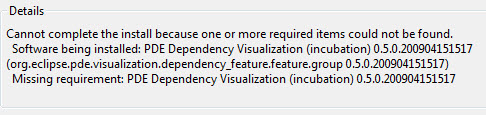
Happy hacking!
And a second favorite what I really like is the Eclipse plugin hell. Disclaimer: I really like working with Eclipse! I'm in the JetBrains Academy, but this does not say anything about that. All tools are good, all tools have their pros and cons, I'm also independent in this tooling context. It is just the amount of plugins and cross-dependencies and the way of required issue resolving in case you have configured your Eclipse distribution (and actually yourself too) into a horrible blind alley. Frequently, in cases where you are really fucked up, the only solution is to completely re-start from scratch. It was becoming much better meanwhile in the Eclipse ecosystem though due to some bunch releasing of components.
Guess what! and now bet what is the top of imagination: a fuXXing error message while installing an Eclipse plugin:
Happy hacking!
12/09/2009
Cloud Manifesto
We are very proud to announce that the Cloud Manifesto is available. After a long night of discussing, the world leading authorities launched the Cloud Manifesto. More than 420 years of summarized experience in that domain defined the four value pairs and principles.
12/08/2009
One more year ...
Almost 2010, wow, time is running. And so much happened this year. I supported different projects in the context of Java/JEE, build-, config-, deploy-, release-management and Agile software development, gave a bunch of seminars (including my Java Tooling Bootcamp), wrote multiple articles, gave presentations at JavaOne and other happenings, was responsible stage producer for the tooling track of "Agile 2009", organized many great JUG Cologne events with awesome speakers, and much more .. thrilling!
What will happen next year? Well, who knows! ;-) Some things are already fix including new publications. First of all, I'm writing two books at the moment. The first book is in English. It will be visible soon, stay tuned. The other book is in German. That one, I write with a co-author. Also this book will be public soon enough. :-)
What else? I got a lot of invitations speaking at conferences. Thank you, .. but I don't know yet which ones I can join for speaking. The priority is to finish the books.
OK, thank you for reading, and sorry, that I do not update the blog frequently. Blogs are becoming more and more a legacy channel IMO, it is easier to post a message on Twitter. ;-) And if I write some more detailed things, this happens in form of books, and from time to time articles. Sorry, I'm more a traditional print medium guy. ;-)
Have a nice day!
What will happen next year? Well, who knows! ;-) Some things are already fix including new publications. First of all, I'm writing two books at the moment. The first book is in English. It will be visible soon, stay tuned. The other book is in German. That one, I write with a co-author. Also this book will be public soon enough. :-)
What else? I got a lot of invitations speaking at conferences. Thank you, .. but I don't know yet which ones I can join for speaking. The priority is to finish the books.
OK, thank you for reading, and sorry, that I do not update the blog frequently. Blogs are becoming more and more a legacy channel IMO, it is easier to post a message on Twitter. ;-) And if I write some more detailed things, this happens in form of books, and from time to time articles. Sorry, I'm more a traditional print medium guy. ;-)
Have a nice day!
Subscribe to:
Posts (Atom)